Insurance & Safety at Penge Skip Hire
 At Penge Skip Hire we operate as a fully insured rubbish company and take safety and insurance responsibilities extremely seriously. Our approach combines comprehensive public liability coverage, rigorous staff training, standard personal protective equipment (PPE) protocols and a documented risk assessment process that meets industry best practice. Whether you search for an insured waste company, an insured rubbish removal provider or an insured skip hire partner, our safety-first policies ensure both your property and our team are protected.
As an established insured skip hire business we maintain up-to-date insurance policies tailored to waste management and skip hire operations. Our public liability insurance covers accidental property damage, third-party injury on site and incidents related to material handling. Coverage is structured to reflect the operational risks unique to rubbish collection, transportation and temporary waste storage. We regularly review policy limits to ensure they align with changing work scopes and local regulatory requirements.
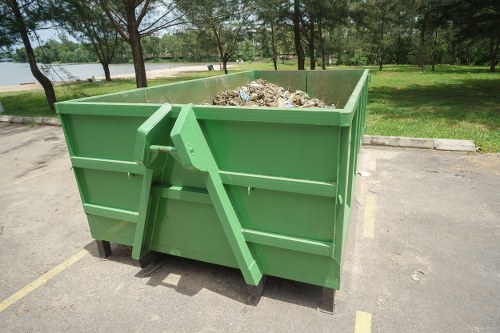 All insurance is supported by clear operational standards. This includes written procedures for loading, securing and transporting waste, a clear chain of responsibility for incident reporting, and a formal claims-handling procedure. Choosing an insured rubbish company like ours means choosing a supplier that can respond promptly and professionally should an incident occur, protecting clients and their sites from the downstream consequences of accidental damage or injury.
Training, Competence and Workforce Safety
Our safety culture is driven by staff development. Staff training is mandatory for every team member and is refreshed regularly to include health and safety updates, manual handling techniques and vehicle operation. We provide a tailored induction for new employees that covers company policy, emergency protocols and expectations for on-site conduct. This ensures the workforce of an insured waste company remains competent and confident in managing the risks associated with waste handling.
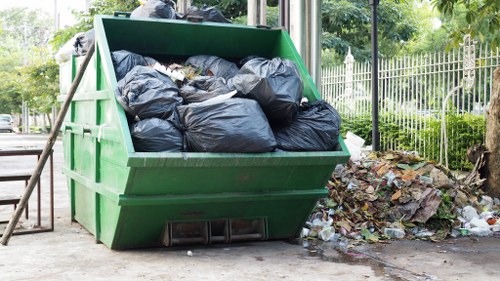 Training consists of both classroom briefings and on-the-job mentoring. Modules include: site hazard awareness, segregation of waste streams, safe access to customers’ properties, and environmental controls to prevent contamination. We keep records of qualifications, refresher dates and toolbox talks, so our team’s training status is always auditable and traceable.
To reinforce learning we run periodic assessments and practical drills. These exercises replicate common scenarios such as awkward lifts, vehicle reversing near pedestrians and dealing with hazardous items within skips. Our aim is to reduce incidents through preparedness — a hallmark of any reputable insured rubbish company.
Personal Protective Equipment (PPE) and Protective Systems
PPE is a visible sign of our commitment to safety. We require appropriate protective equipment on every job and maintain supply standards across the business. Required PPE varies by task and may include high-visibility clothing, gloves, steel-toe boots and eye protection. For specialist operations we mandate additional protection such as respiratory masks or chemical-resistant suits.
PPE checklist:
- High-visibility outerwear for all roadside and kerbside activity
- Gloves suitable for handling mixed waste and sharps
- Safety boots with reinforced toes and slip-resistant soles
- Eye and respiratory protection when required by task-specific risk
- Hearing protection during prolonged exposure to noisy equipment
We also have inspection schedules for PPE to ensure equipment remains in good condition. Worn or damaged items are withdrawn and replaced immediately. Consistent application of PPE rules is part of our daily supervisory checks and contributes to our status as an insured skip hire specialist that values both compliance and care.
Our risk assessment process is systematic, documented and integrated into every job request. Before any skip delivery or collection we carry out a site-specific assessment that considers access, traffic flow, proximity to utilities, pedestrian routes and environmental sensitivities. This process is designed to identify hazards, evaluate the likelihood and consequence of harm, and specify control measures that reduce risk to as low as reasonably practicable.
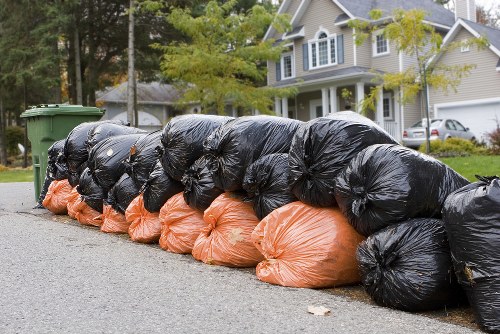 The risk assessment steps typically include:
- Pre-site review: examine booking notes and customer-supplied photographs
- On-site inspection: confirm ground conditions, overhead obstructions and vehicle turning areas
- Hazard identification: spot potentially hazardous items such as asbestos, chemicals or live electrical work
- Control measures: implement exclusion zones, traffic management or additional personnel as required
- Record keeping: document findings, controls and any client instructions
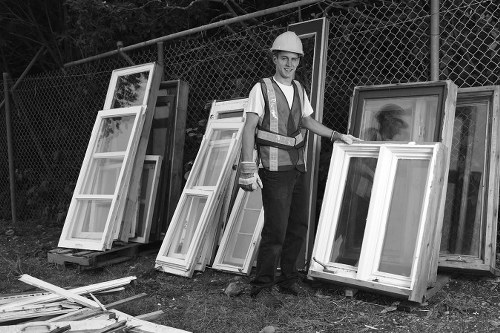 In the event of changeable conditions — for example poor weather, unexpected ground instability or a discovery of hazardous waste — our teams conduct a dynamic risk assessment and adjust procedures accordingly. Supervisors are empowered to stop work until controls are re-established, ensuring that safety and insurance protections remain effective throughout the job.
In summary, Penge Skip Hire combines robust public liability insurance, continuous staff training, comprehensive PPE protocols and a disciplined risk assessment process to deliver secure, professional services. As an insured rubbish company we focus on prevention, preparedness and prompt action, which together protect clients, employees and the wider community while maintaining high standards across every skip hire and waste removal project.